1. Market Growth Trajectory: 7.95 GW to 18.05 GW
The Pakistani solar photovoltaic market is experiencing unprecedented compound growth. According to a comprehensive industry benchmark report published by Mordor Intelligence, Pakistan's total installed solar capacity is projected to scale from 7.95 Gigawatts (GW) in 2024 to over 18.05 GW by 2031, representing a Compound Annual Growth Rate (CAGR) of 17.82%.
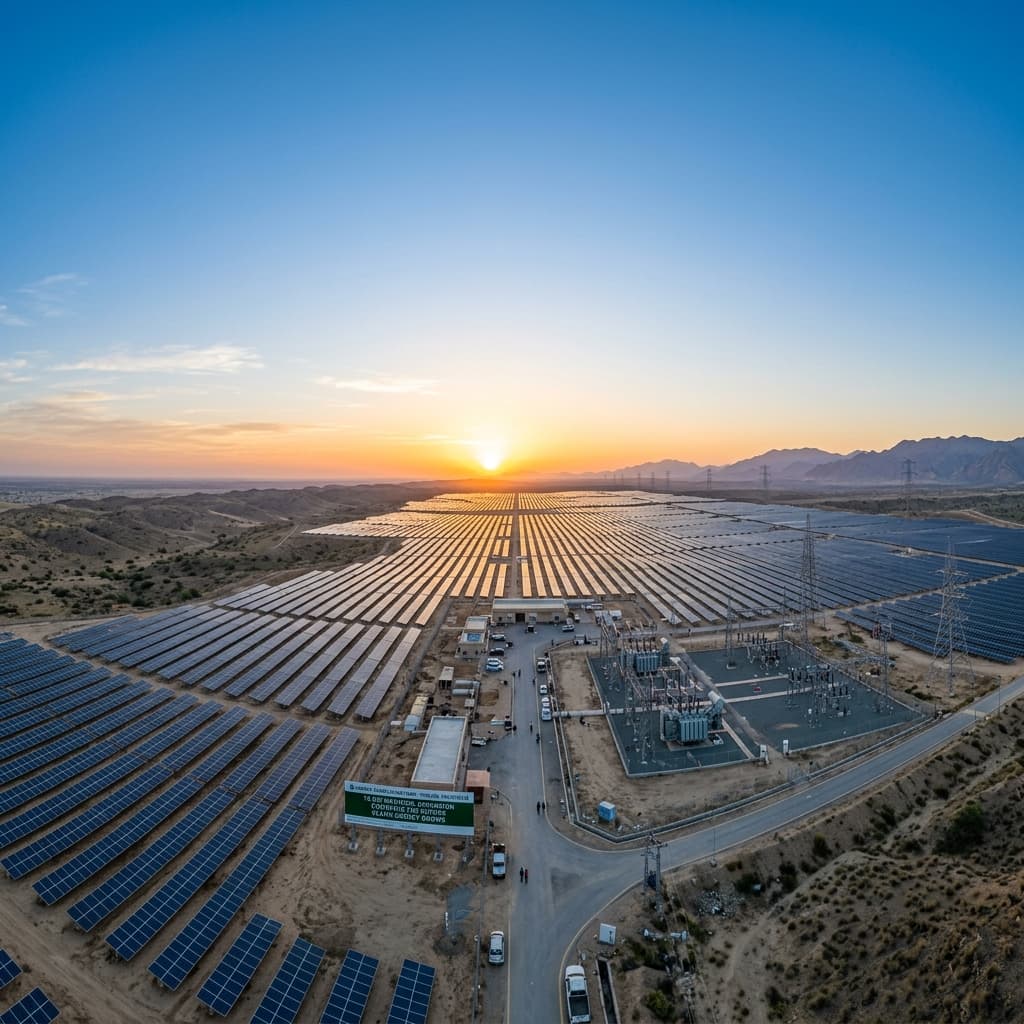
This explosive expansion places Pakistan among the fastest-growing distributed solar markets in South Asia, outstripping initial government renewable energy targets set under the Integrated Generation Capacity Expansion Plan (IGCEP).
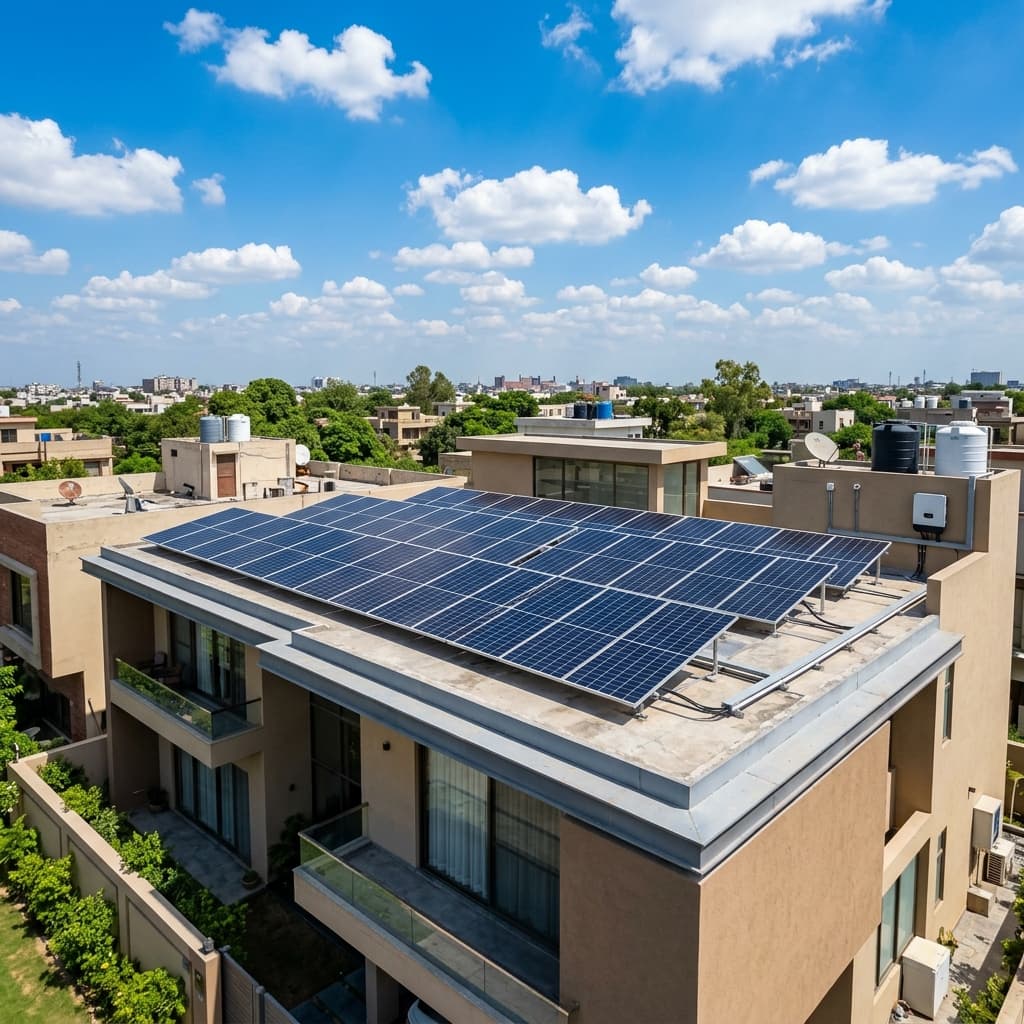
Unlike Western nations where utility-scale solar farms drive market growth, Pakistan's solar revolution is overwhelmingly bottom-up—driven by private rooftop investments from homeowners, commercial plazas, schools, hospitals, and industrial factory complexes.
2. Sectoral Market Breakdown: C&I Dominance
An analysis of import customs data and distribution grid connections reveals that the Commercial & Industrial (C&I) sector commands over 51% of total cumulative solar capacity deployed across the country.
Faced with grid electricity tariffs exceeding PKR 65 per unit for peak industrial consumption, business owners view solar PV not as an optional green initiative, but as a mandatory operational cost-containment strategy.
The residential sector accounts for 34% of market volume, driven by urban households seeking protection against unpredictable monthly billing adjustments. Agricultural solar water pumping and off-grid rural electrification make up the remaining 15%.
"When utility power costs rise beyond commercial profitability limits, grid defection accelerates. Businesses are locking in 25-year fixed energy costs by building their own rooftop solar plants."
- Commercial & Industrial (C&I): 51% Market Share (Factories, Mills, Malls, Hospitals).
- Residential Rooftop: 34% Market Share (Urban & Suburban Housing Societies).
- Agricultural & Rural: 15% Market Share (Tubewell Conversions & Off-Grid Solar).
3. IMF Tariff Mandates & Secondary Market Price Volatility
Despite stellar growth projections, the retail solar market has experienced short-term price volatility. Anticipation of IMF-mandated tax reforms and potential sales tax adjustments on imported renewable equipment has induced market uncertainty.
In response to rumor-driven demand, secondary wholesale distributors and retail vendors in major hub markets (such as Hall Road Lahore and Plaza Market Karachi) engaged in artificial inventory hoarding.
Consequently, retail prices for individual high-efficiency Tier-1 solar modules (585W, 625W, and 715W N-Type TOPCon) increased by PKR 2,500 to PKR 4,000 per panel over a 3-week window.
Soltronic Energy analysts emphasize that global FOB panel manufacturing costs in China remain at historic lows ($0.09 to $0.11 per Watt). Price increases in Pakistan are strictly domestic supply-chain bottlenecks created by intermediary speculation.
4. Technology Preference Shift: N-Type TOPCon Dominance
The report highlights a rapid technology phase-out of legacy P-Type PERC panels. Over 82% of all solar panel shipments imported into Pakistan over the past two quarters consisted of N-Type TOPCon (Tunnel Oxide Passivated Contact) and Heterojunction (HJT) modules.
Buyers are increasingly favoring higher wattage ratings (585W–715W+) with bifacial glass-glass construction, recognizing that higher module efficiency reduces mounting structure steel costs, DC wiring requirements, and installation labor overhead per installed kilowatt.
5. Strategic Outlook & Procurement Guidance
Soltronic Energy advises commercial buyers and residential homeowners against delaying solar decisions due to short-term market price fluctuations. Grid electricity tariffs are scheduled for further upward adjustments under national debt-restructuring frameworks.
Securing a fixed-price EPC contract with an established Tier-1 provider like Soltronic Energy ensures direct factory-gate equipment pricing, bypassing secondary middleman retail markups and guaranteeing genuine manufacturer warranties.